
Editing farm events had become a frustrating experience, with long load times, excessive API requests, and conflicting real-time updates affecting application responsiveness and reliability. By identifying performance bottlenecks and improving how the application processed requests and status updates, I reduced load times by approximately 75%, significantly decreased unnecessary operations, and delivered a faster, more dependable user experience.
The Challenge
Slow performance. Unreliable updates.
Editing large batches of farm events had become increasingly inefficient. Loading 100 events took over 90 seconds, while excessive API requests and unnecessary UI actions added processing overhead.
Competing real-time messaging streams also caused inconsistent event statuses, occasionally displaying outdated or duplicate information. Together, these issues slowed everyday workflows and made the application less responsive and reliable for users.
The Approach
Measure first. Optimize with purpose.
I began by profiling a batch of 100 events to establish measurable baselines for load times, UI actions, and API requests.
Using those findings, I traced the application's messaging and state-management workflows to identify redundant operations, unnecessary network requests, and competing updates. This provided a clear path toward targeted improvements without introducing unnecessary complexity.
The Strategy
Reduce overhead. Restore consistency.
I eliminated redundant Event Summary API requests and refined how the application processed its two real-time messaging streams: Event Changed and Event Status Changed.
To prevent conflicting updates, I introduced logic that consolidates duplicate messages and prioritizes the most recent event status. This ensures outdated processing states cannot overwrite newer information displayed in the UI.
I also optimized how Event Information panels close after saving, allowing the interface to respond immediately while relying on existing real-time messaging to reflect updated statuses rather than waiting for additional confirmation requests.
Together, these changes reduced unnecessary processing, improved state consistency, and made the application noticeably more responsive.
The Outcome
Measurable improvements across the board.
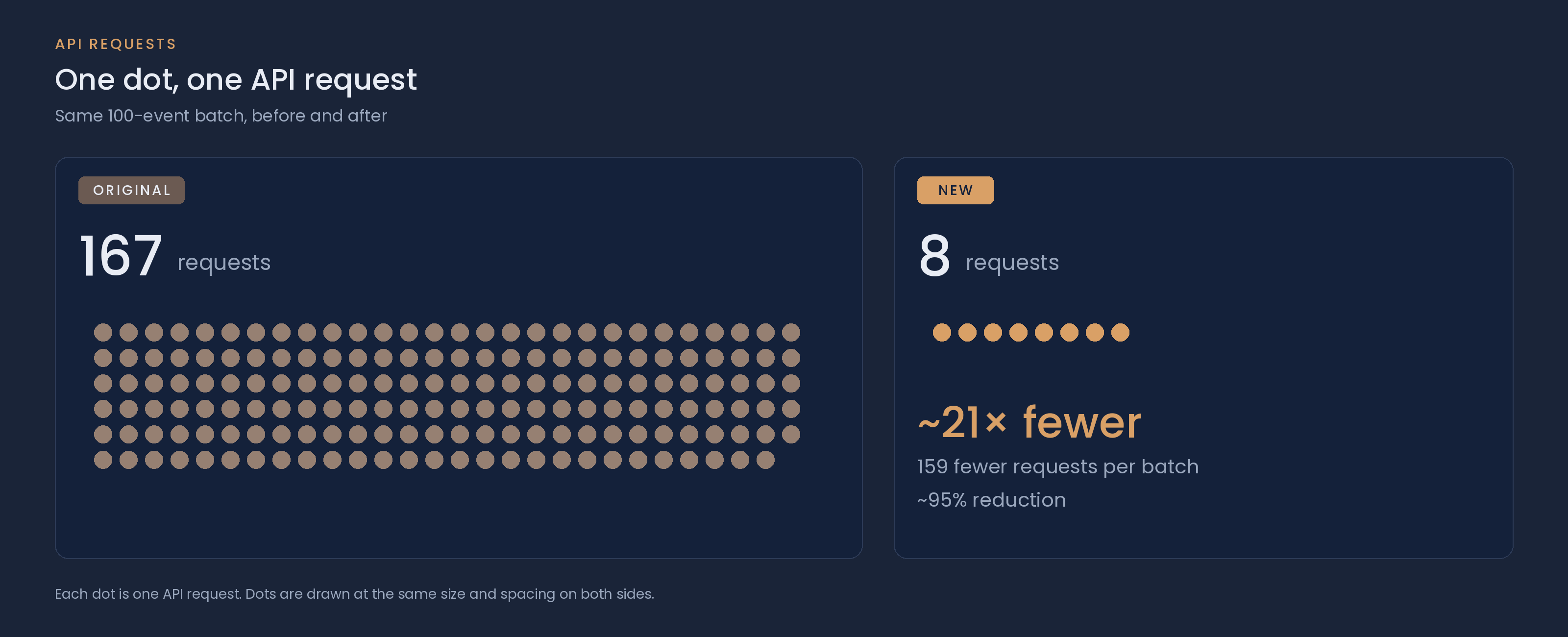
Re-profiling the same batch of 100 events confirmed substantial improvements across every measured metric. Load times dropped from 95 seconds to just 24 seconds, while UI actions and API requests decreased dramatically.
These improvements translated directly into faster interactions, reduced processing overhead, and a more responsive experience for users working with large batches of events.
Load time
~75% faster
Actions called
~69% fewer
API requests
~95% fewer
The Value
Faster workflows. A more reliable experience.
Beyond faster load times, the improvements made everyday interactions more responsive and predictable. CPU usage, which previously reached sustained 100% utilization during heavy messaging activity, was substantially reduced, allowing the application to process incoming updates without the same performance bottlenecks.
For users, the difference was immediate: less waiting, more consistent status information, and a smoother experience when editing large batches of events.